
G.I. Joe: The Movie arrived on home video on 25 August 1987, after Hasbro had meant it to follow My Little Pony: The Movie and The Transformers: The Movie into cinemas. The earlier films’ weak box office and the production’s own delays pushed it to tape.1 Sunbow and Marvel Productions made it, Toei Animation drew it in Japan, Don Jurwich directed, and Buzz Dixon, who is not credited on screen, wrote it.2
The film was revised three times before it reached tape: Duke’s fate, the name Cobra-La, and the release itself.
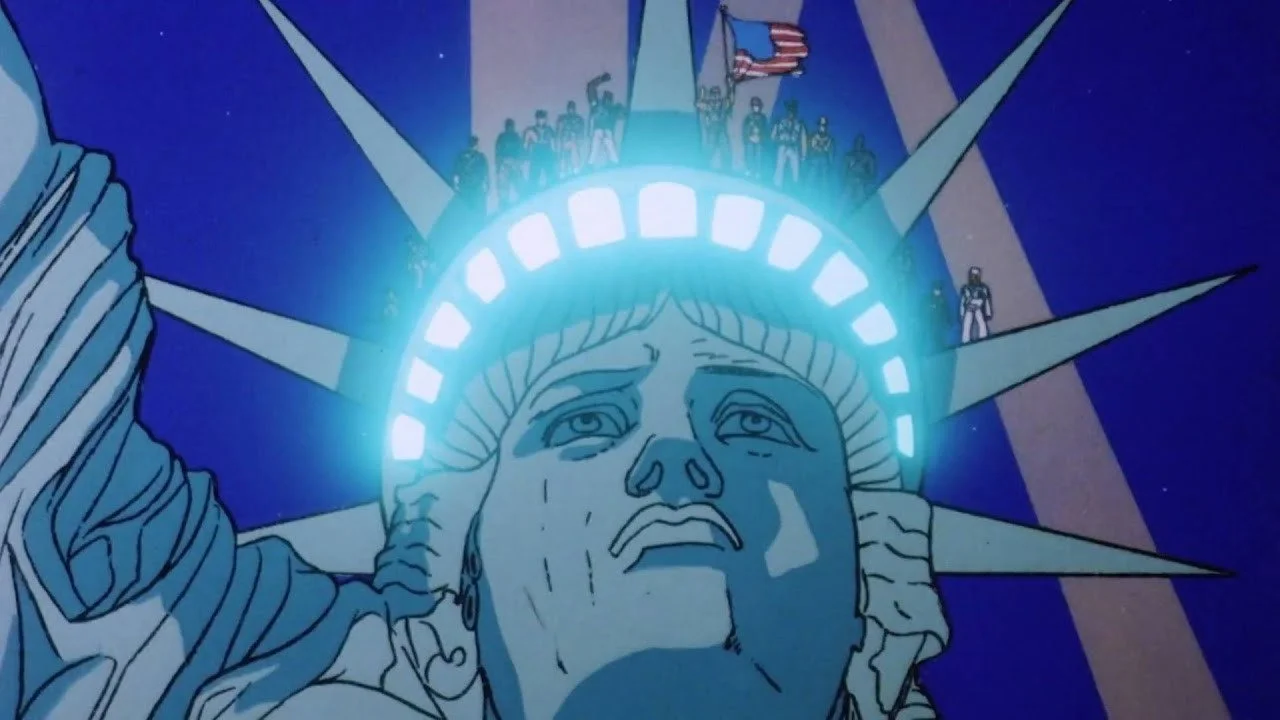 The Statue of Liberty, from the opening battle. G.I. Joe: The Movie, 1987.
Duke was meant to die
In Dixon’s account, the script had Duke killed in the last battle by a snake spear thrown by Serpentor, and the writing coincided with the production of The Transformers: The Movie, in which Optimus Prime dies.3 A funeral for Duke was scripted before the final fight. After fans and parents objected to Optimus Prime’s death, Hasbro reversed course on Duke, but the death scene stayed: new dialogue says that he fell into a coma, and the ending says he has come out of it.
Dixon’s own verdict, in the interview Wikipedia cites, is that if you watch the visuals and ignore the soundtrack, “it’s obvious Duke dies.” The film tells two stories about Duke, what the pictures show and what the dialogue says.
Cobra-La was a placeholder
The second revision is a name. “Cobra-La” began as a stand-in name, borrowed from the Shangri-La of James Hilton’s 1933 novel Lost Horizon, which the writers meant to replace; Hasbro executives liked it and it stayed.4 The name stuck to the film’s central revelation: Cobra, the modern terrorist organisation the cartoon had spent years establishing, was a front for an ancient civilisation of engineered creatures led by Golobulus, whom Burgess Meredith voiced.5
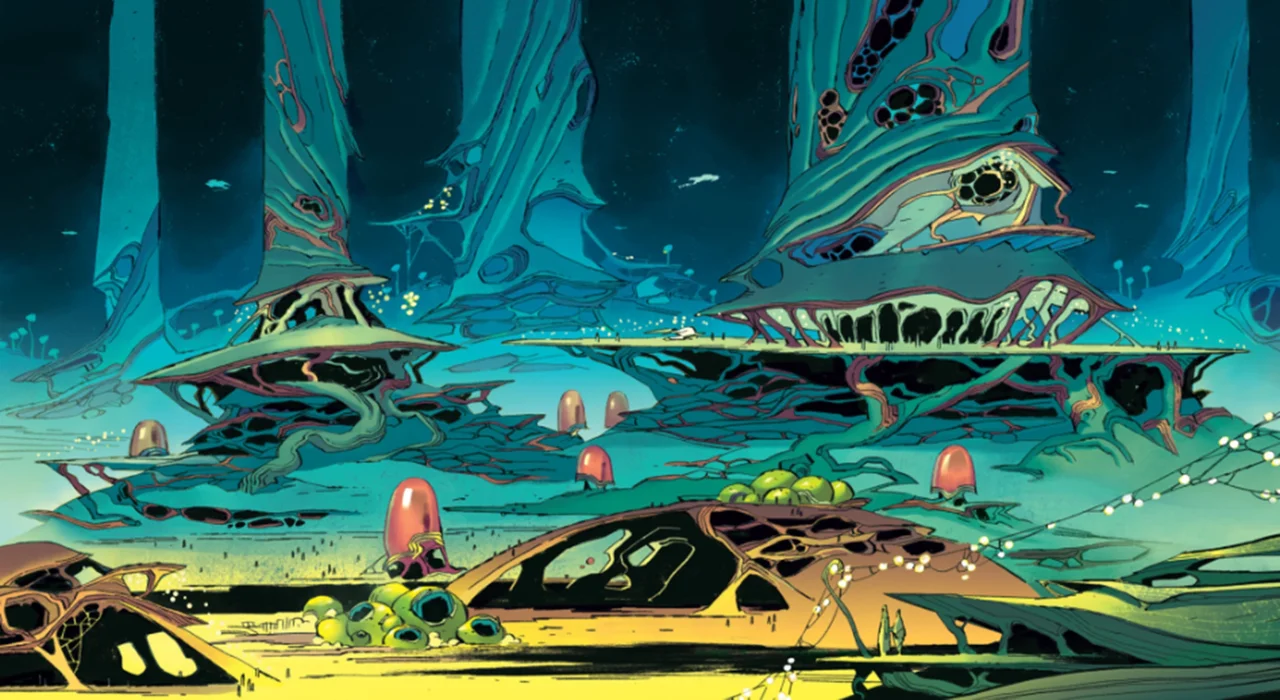 Cobra-La, a landscape of organic towers and glowing pods. G.I. Joe: The Movie, 1987.
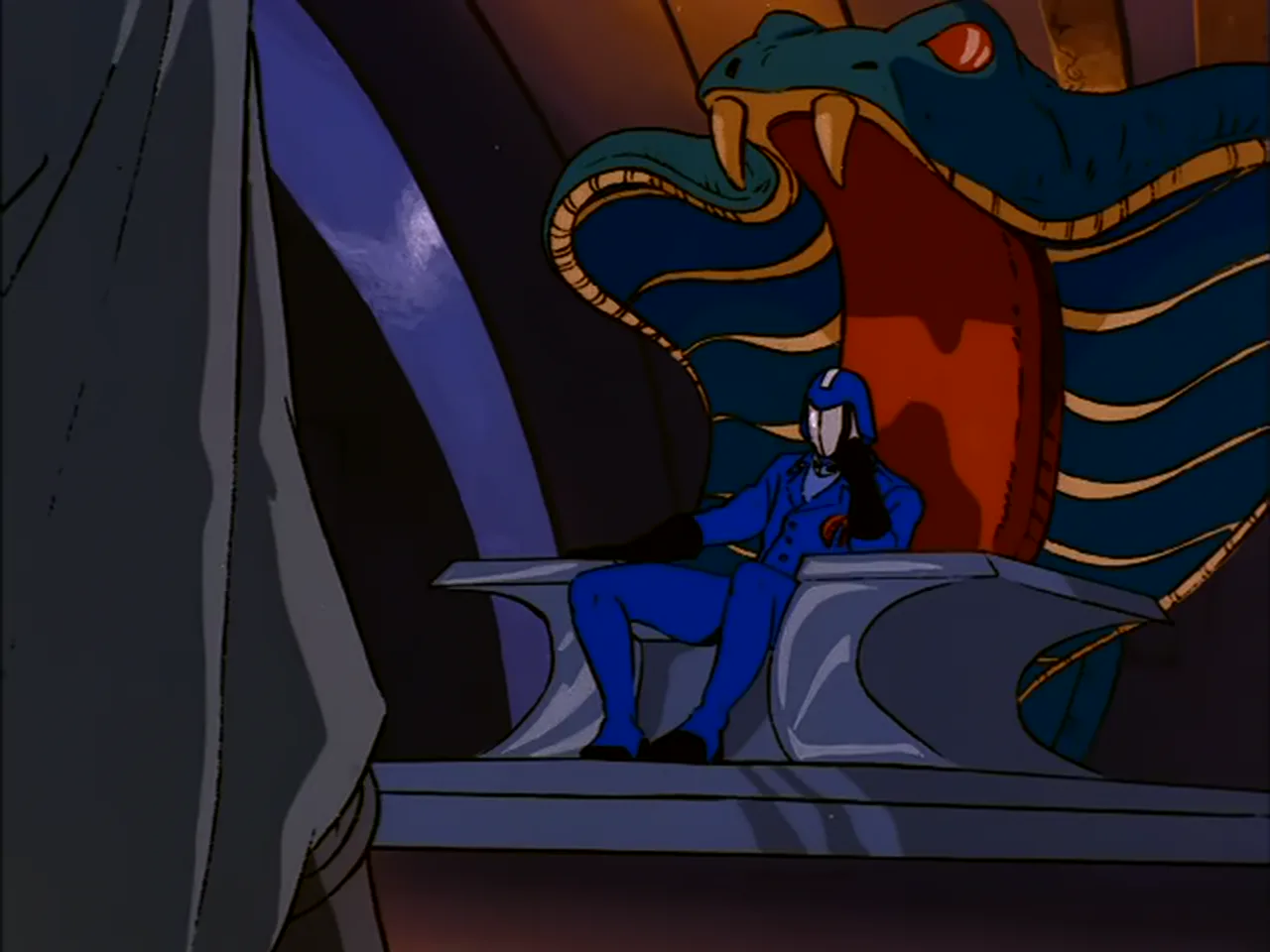
Cobra Commander, voiced as always by Chris Latta, is slowly transformed into a snake by the mutative spores.6
It went to tape first
The third revision is the format. The film premiered on tape and then reached syndication, as early as 4 September 1987, first as a feature and later split into a five-part miniseries.7 Don Johnson voiced Lt. Falcon and Burgess Meredith voiced Golobulus. 8 The cartoon that followed in 1989 takes place after the film.9
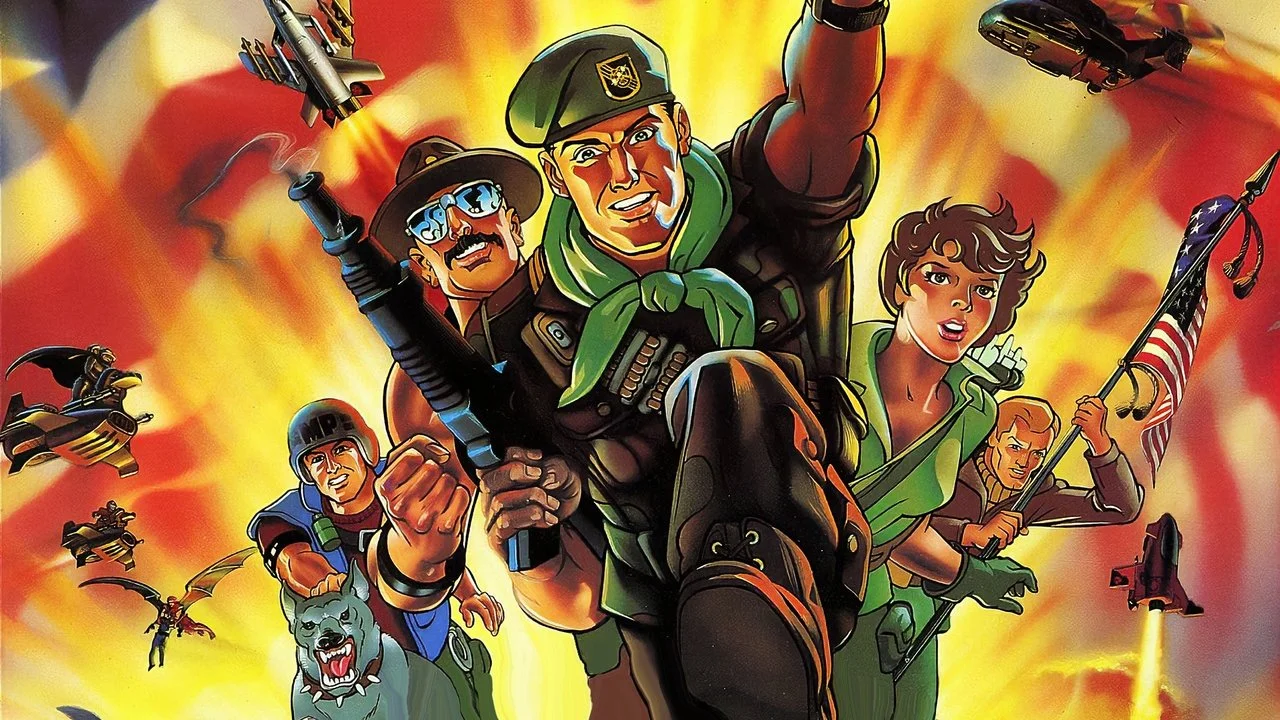 Key art for G.I. Joe: The Movie, 1987.
How to watch it now
Rhino released the first DVD on 20 June 2000, and Shout! Factory followed with a remastered special edition on DVD and Blu-ray on 27 July 2010, carrying the Dixon commentary and a printable screenplay. Fathom Events gave it a two-day theatrical run for the 35th anniversary in 2022.10
Our own page for the film has the cast, stills and production notes, and the Duke and Golobulus pages cover the characters.
Sources: G.I. Joe: The Movie, Wikipedia, and the sources it cites, including the Buzz Dixon interview; our own movie page.
Footnotes
-
Wikipedia, which cites a 1980s toy-industry source for the planned theatrical status. ↩
-
Wikipedia lists Jurwich as director and Dixon as an uncredited writer, with Ron Friedman also credited. ↩
-
Wikipedia, citing Buzz Dixon’s interview. The dating of the writing to the Transformers production is Dixon’s. ↩
-
Wikipedia, citing the Dixon interview. ↩
-
Voice credits are from Wikipedia and our own movie page. ↩
-
Wikipedia says Latta voices the Commander and that mutative spores cause the transformation. ↩
-
Wikipedia, which says the syndicated premiere came as early as 4 September 1987. ↩
-
Don Johnson’s casting is cited on Wikipedia to a Los Angeles Times article. ↩
-
Wikipedia says the 1989 series follows the film. ↩
-
Wikipedia, which cites the Rhino and Shout! Factory releases and the Fathom Events anniversary showing. ↩
 Silent Interlude: How G.I. Joe #21 Told a Whole Story Without a Word
 The M.A.S.S. Device: The Miniseries That Made the Joes Pay for Everything
★ DISCUSSION
Join the conversation.
Comments below are mirrored on the gijoe.army forum. Sign in once, post anywhere.